
How Your Child’s Feet Develop in the Early Years (and why understanding this will make a difference)
- Sam Chetwood

- Jan 4
- 4 min read

From the moment your child is born, their feet are busy doing an extraordinary job. Long before your
little one takes their first steps, their feet are growing, adapting, learning and responding to the world.
Children’s feet are not simply “mini versions” of adult feet. They are soft, malleable and constantly changing, especially during the first five years. Understanding how their gorgeous little feet develop can help you make confident, informed choices that will support your child now and well into the future.
We'll cover four key elements: bones, muscles, arches and sensory development, then bring it all together to highlight how footwear choices in the early years can make such a difference.
Bones: soft, growing and easily influenced
At birth, many of the bones in the foot are still made of cartilage, which is much softer and more flexible than bone. This allows the foot to mould and grow as your child develops.
In fact, babies are born with around 300 developing bones in their bodies, many of which gradually fuse together over time to form the 206 bones of an adult skeleton. In the feet, this process of hardening and fusing (called ossification) continues well into the teenage years.
During the early years:
The bones in the toes and forefoot begin forming before birth
Some key bones in the midfoot, including those that form part of the foot’s arches, don’t begin to form and harden until around ages 3–4
Growth plates are still open, making bones more vulnerable to ongoing pressure
Which is why persistent pressure, particularly around the toes, can have such an impact. Bones develop in response to the forces placed upon them. If the tiny bones of the toes are regularly squeezed, restricted or held in an unnatural position, bones can gradually form to that shape, influencing foot function, posture and how they move for the long term.
Muscles: building strength through movement
Without muscles (and tendons and ligaments), we would just be a pile of bones. Our skeleton relies heavily on our muscular structure, and children need time and freedom to build strength.
There are two types of muscles involved in foot movement:
Extrinsic muscles, which start in the leg and control larger movements like lifting and pointing the foot
Intrinsic muscles, which live entirely within the foot and help stabilise it, support balance and control the toes
These smaller intrinsic muscles are especially important, and fascinatingly, around 40% of the muscles in each foot are dedicated to the big toe. The big toe plays a huge role in balance and push-off when walking.
Muscles strengthen through:
Movement
Experiencing a variety of surfaces
Allowing the foot to bend, flex and work naturally
Shoes that are overly stiff, rigid or restrictive can limit how much these muscles are able to work, particularly in toddlers, who are still learning how to walk and move their bodies confidently.
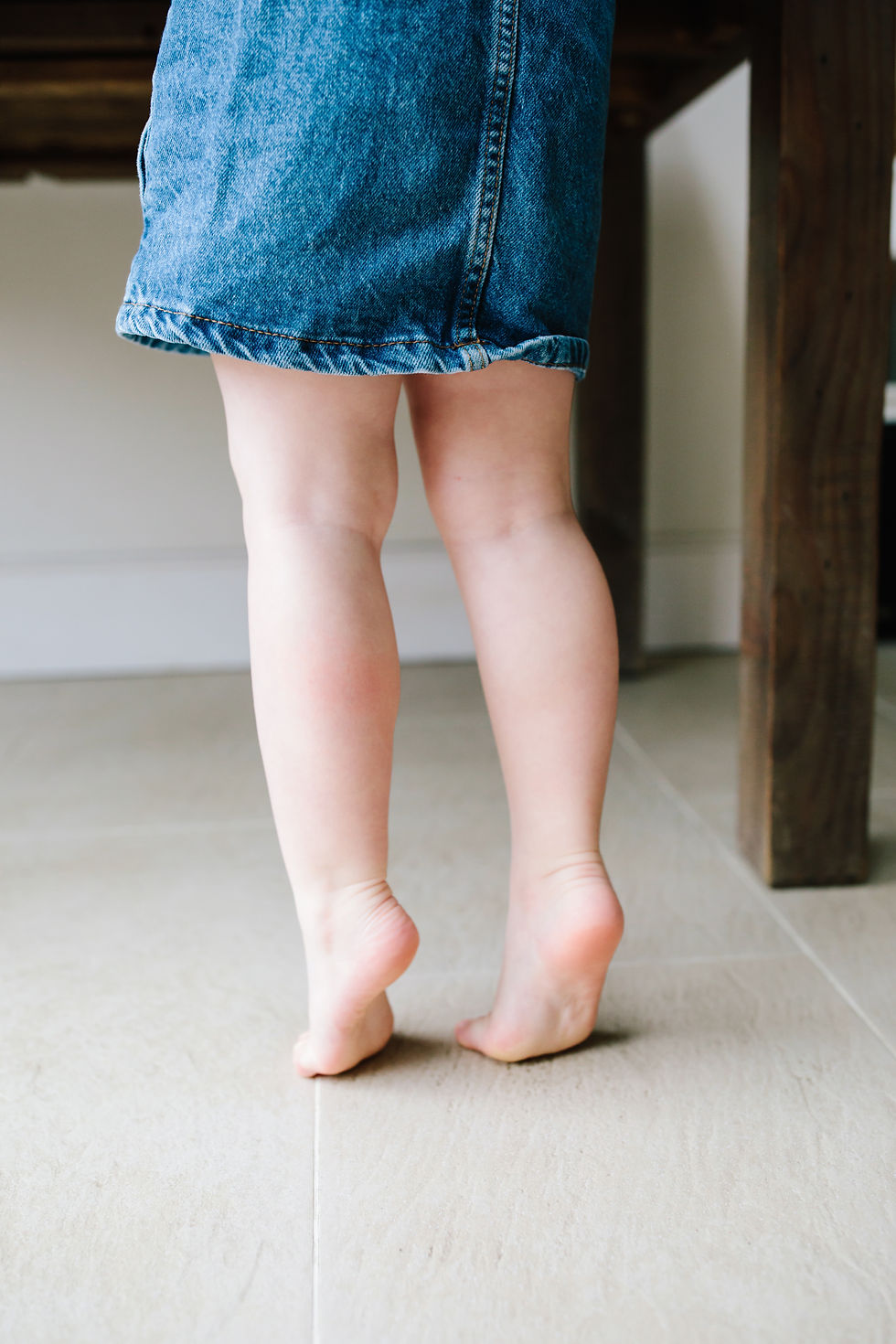
Arches: they develop gradually (and that’s normal)
One of the most common concerns parents have is: “My child doesn’t seem to have arches, should I be worried about flat feet?”
The short answer is: in the majority of most cases, absolutely not.
Most young children appear to have “flat feet” because:
They still have fat pads under the arch area to protect their developing bones
The muscles and ligaments that support the arches are still developing
Arches are not a single structure, they are created and supported by bones, muscles, tendons and ligaments working together. The foot needs to be flexible at first (to absorb shock), adapting to become more stable as we push off during walking and running.
This dynamic system takes time. For many children, arches don’t become clearly visible until they are more active, often well beyond the toddler years.
Rather than trying to “correct” arches, the goal in early childhood is to support natural development, allowing feet to move and strengthen as intended.
Sensory development: how feet help the brain learn
The soles of the feet contain thousands of nerve endings, which are constantly sending information to the brain about:
Pressure
Texture
Temperature
Balance and our body’s position
This sensory feedback is crucial for something called proprioception, your child’s ability to understand where their body is in space without consciously thinking about it.
Every time your child stands, walks, climbs or jumps, their feet are:
Gathering information from the ground
Feeding it back to the brain
Helping refine balance, coordination and movement patterns
Building neural connections critical for brain development
Shoes that are very thick, rigid or heavily cushioned will dull this feedback. While shoes are sometimes necessary for protection, it’s helpful to remember that feet are also a learning tool, not simply something to be covered up.
Bringing it all together: why footwear choices really matter

Bones, muscles, arches and sensory feedback don’t develop in isolation, they are intricately interconnected.
During the first five years:
Feet are growing rapidly
Bones are still forming
Muscles are strengthening and learning how to work together
The brain is building movement patterns that can last a lifetime
This is why what your child wears on their feet matters.
Supportive footwear in early childhood doesn’t mean rigid or restrictive. It means:
Enough space for toes to spread and move freely
Flexibility to allow the foot to bend and more naturally
Allowing the foot to feel the ground and work as designed
Avoiding ongoing pressure in any one area
Every pair of feet is unique and during these early years they are changing rapidly. There's no such thing as a “perfect” shoe and no parent gets this right all the time. What matters most is awareness, balance and making thoughtful choices when you can.
By paying attention to your child’s growing feet now, you are helping to lay the foundations for confident movement, comfort and foot health for many years to come.
This article is intended to support and inform parents about children’s foot development. Every child is unique, and this information is not a substitute for individual medical advice. If you have specific concerns about your child’s feet, walking or development, we always recommend speaking with a qualified healthcare professional such as a GP, health visitor or podiatrist.


Comments